
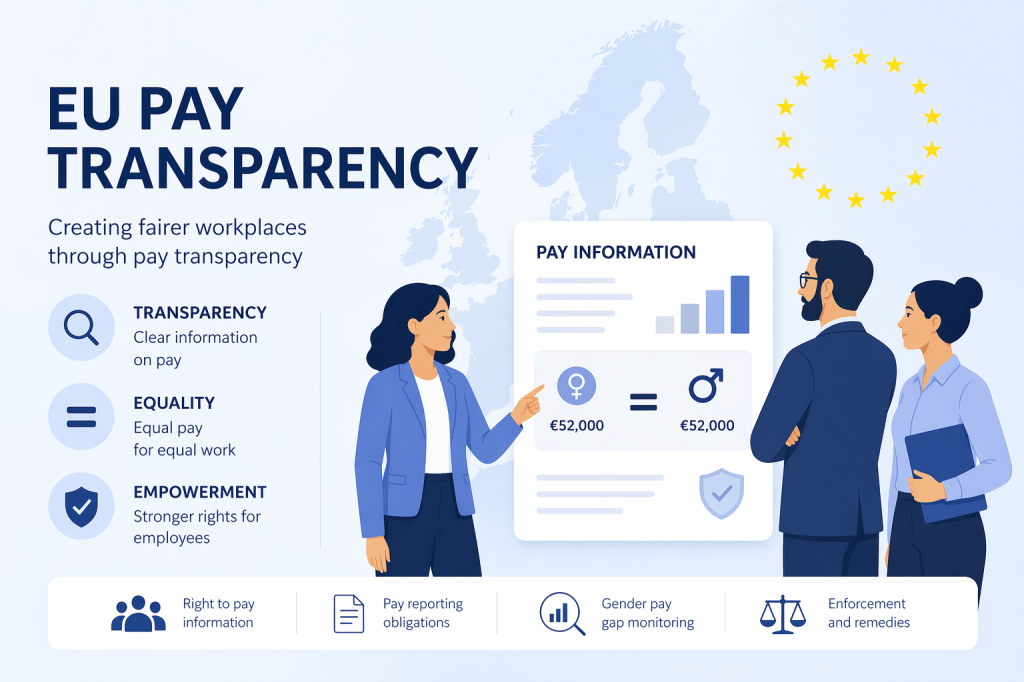
The European Union’s Pay Transparency Directive is set to transform how employers approach pay, recruitment and workplace equality. Member States must transpose the Directive into national law by 7 June 2026, with employers expected to comply with the new requirements once implemented in their country.
What is changing?
The Directive aims to strengthen equal pay for equal work by increasing transparency around salaries and helping employees identify and challenge unjustified pay differences.
Key measures include:
- Providing salary information or pay ranges to job applicants before interviews.
- Prohibiting employers from asking candidates about their salary history.
- Giving employees the right to request information about pay levels and pay progression criteria.
- Requiring larger employers to report on gender pay gaps and, where significant unexplained gaps exist, take corrective action.
Who will be affected?
The new rules will affect employers across EU Member States, although the exact requirements and implementation dates will vary as each country introduces its own legislation. Businesses operating in multiple EU countries should monitor local developments closely and prepare for differing compliance obligations.
What should UK companies do now?
Even if your UK workforce is not directly covered, now is a good time to review your reward practices. Practical steps include:
- Identify where the rules apply. Determine which EU countries you operate in and understand each country’s implementation of the Directive.
- Review pay structures. Ensure pay decisions are based on objective, measurable criteria such as skills, experience, qualifications and performance.
- Audit recruitment processes. Update job advertisements and recruitment policies to include salary ranges where required and remove questions about previous salary.
- Conduct a pay gap review. Analyse pay data to identify any unexplained gender pay differences before reporting obligations arise.
- Document pay policies. Maintain clear records explaining how pay and progression decisions are made.
- Train managers and HR teams. Ensure those involved in recruitment, reward and performance management understand the new transparency requirements.
- Review HR and payroll systems. Check that systems can support future reporting obligations and provide accurate pay data when requested.
Why prepare early?
Preparing ahead of implementation can reduce compliance risks, minimise the likelihood of equal pay disputes and strengthen employee trust. Organisations with transparent, well-governed reward frameworks are also likely to find it easier to attract and retain talent in an increasingly competitive labour market.
For UK businesses with EU operations, the next 12 to 24 months provide an opportunity to review policies, modernise reward practices and ensure they are ready as individual Member States introduce their national legislation.

