
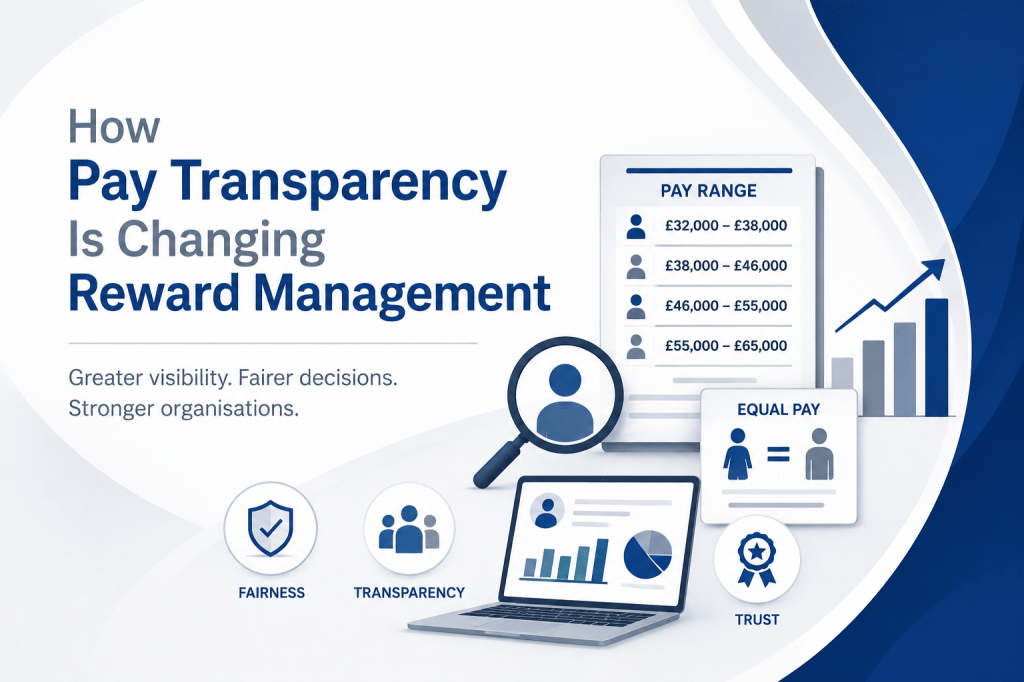
Pay transparency is becoming a defining issue for reward management in the UK. While the EU Pay Transparency Directive will apply directly only in EU Member States, many UK employers with European operations are already reviewing their pay practices. At the same time, increasing scrutiny around gender pay gaps, fair pay and employee trust is pushing transparency higher up the HR agenda.
For reward teams, the shift is not simply about publishing salary ranges. It is about ensuring that pay decisions can be explained, evidenced and applied consistently across the organisation.
What is changing?
Employees increasingly expect clear information about how pay is determined and how they can progress. Employers are responding by:
- Introducing salary ranges for roles and job levels.
- Using more structured job evaluation frameworks.
- Documenting pay and progression criteria.
- Reviewing recruitment practices, including salary history questions.
- Conducting regular pay equity and gender pay gap analysis.
These changes are moving reward management away from individual negotiation and towards more transparent, data-led decision making.
Why reward teams are adapting
Greater transparency can help organisations improve consistency, reduce the risk of equal pay claims and strengthen employee trust. It also supports recruitment and retention by giving candidates a clearer understanding of pay expectations and career progression.
However, transparency also exposes weaknesses in existing reward structures. Unexplained pay differences, inconsistent market positioning and unclear progression pathways become much harder to defend when employees can compare pay information more easily.
Practical steps for UK employers
Reward and compensation teams can prepare by focusing on a few core areas:
- Review pay structures and salary bands to ensure they reflect current market data.
- Define objective criteria for starting salaries, pay reviews and promotions.
- Conduct regular pay equity audits to identify unexplained gaps.
- Train managers to communicate pay decisions consistently and confidently.
- Ensure HR and payroll systems can support future reporting and transparency requirements.
The bigger picture
Pay transparency is changing reward management from a largely administrative function into a strategic capability focused on fairness, governance and employee experience. Organisations that invest now in clear pay frameworks, robust data and consistent decision making will be better placed to meet future regulatory requirements and build trust with their workforce.
For UK employers, the question is no longer whether pay transparency will influence reward strategy, but how quickly they can adapt to a more open and accountable pay environment.
 overwoodpeopleconsulting.co.uk